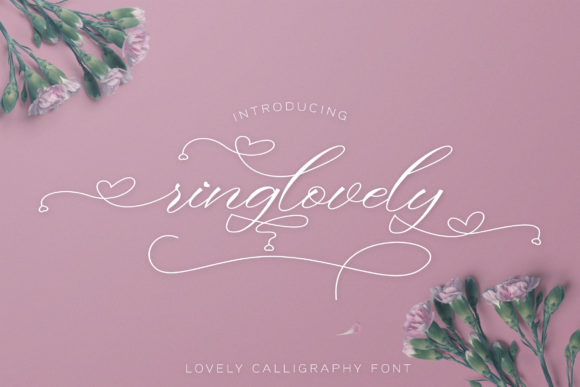
Ringlovely Font: Elegant Script Handwritten Typography for Web Design
Elevating Hero Sections with Ringlovely Script Handwritten Fonts
When designing high-conversion landing pages, integrating Ringlovely as a primary display typeface can instantly establish an emotional connection with visitors. As an elegant and flowing handwritten font, it serves as a powerful alternative to standard sans serif headers that often feel sterile in creative or boutique niches. For web designers tasked with building brand-focused web experiences, this specific script handwritten style offers a unique opportunity to soften digital interfaces while maintaining professional polish. The varying baseline inherent in Ringlovely creates a natural rhythm that guides the eye across hero banners, making promotional messages feel personal rather than automated.
In practical UI application, this typeface excels when used for short, impactful statements above the fold. Because it features smooth lines and gorgeous glyphs, it remains legible at larger sizes without losing its delicate character. However, web creators must be mindful of contrast ratios; placing this elegant script against busy photography requires careful overlay management to ensure accessibility standards are met. When utilized correctly in hero sections, Ringlovely transforms generic value propositions into bespoke brand narratives, encouraging users to linger longer on the page and engage with the content below.
Optimizing Conversion Rates Using Ringlovely in Call-to-Action Areas
Digital product creators often struggle to balance personality with usability in conversion zones, but Ringlovely provides a sophisticated solution for accentuating calls to action without sacrificing clarity. While body copy should always remain in highly readable sans serif fonts, using this script handwritten typeface for supporting CTA text—such as "Start Your Journey" or "Limited Edition"—can increase perceived value. The PUA encoded nature of the font means you can access all of the glyphs and swashes with ease, allowing designers to add subtle flourishes that draw attention to specific interactive elements without resorting to aggressive colors or animations.
- Button Adjacency: Use Ringlovely for micro-copy next to primary buttons to add warmth to transactional moments.
- Pricing Tables: Highlight tier names like "Premium" or "VIP" with this elegant flow to justify higher price points.
- Form Headers: Soften data entry friction by labeling forms with a welcoming, human-centric typeface.
- Trust Signals: Incorporate hand-lettered style accents near testimonials to reinforce authenticity and social proof.
It is critical to note that while Ringlovely enhances aesthetic appeal, it should never replace functional interface text. Navigation menus, footer links, and long-form instructions require stable geometry that script fonts cannot provide. Instead, treat this asset as a strategic highlighter within your visual hierarchy, directing user focus toward revenue-generating actions through typographic contrast.
Implementing PUA Encoded Glyphs from Ringlovely in Digital Brand Kits
For brand identity designers working across multiple digital touchpoints, the technical flexibility of Ringlovely ensures consistent application from website headers to social media graphics. Being PUA encoded means you can access all of the glyphs and swashes with ease directly within design software like Figma, Adobe XD, or Canva, without needing specialized OpenType-savvy applications. This accessibility is vital for maintaining a cohesive online identity where every banner, story template, and email header reflects the same level of typographic refinement. The varying baseline prevents repetitive patterns when the font is used repeatedly across a comprehensive brand kit, ensuring each instance feels organic and intentional.
This capability extends beyond simple decoration; it allows for the creation of custom logotypes and wordmarks that retain the scalability of vector fonts while possessing the uniqueness of hand-drawn lettering. When delivering digital assets to clients, providing pre-set glyph combinations saves time and reduces the risk of brand inconsistency. Whether crafting a signature for an about page or a stylized tagline for an Instagram bio, the extensive alternate characters enable designers to tailor the typography to fit specific spatial constraints without compromising the font’s core elegance.
Pairing Ringlovely with Sans Serif Fonts for Readable Web Layouts
Achieving optimal readability in web design requires balancing the decorative nature of Ringlovely with structurally sound companion typefaces. As a script handwritten font with significant personality, it demands a neutral partner to anchor the layout and prevent visual fatigue. Pairing this elegant display font with a clean geometric sans serif or a modern neo-grotesque creates a necessary tension that enhances both legibility and style. The smooth lines of Ringlovely act as the emotional hook, while the supporting sans serif handles the heavy lifting of information delivery, ensuring that users can scan content efficiently on mobile devices and desktop screens alike.
- Establish Hierarchy: Reserve Ringlovely strictly for H1 and H2 headings or pull quotes, keeping H3s and body text in simpler fonts.
- Scale Appropriately: Set the script font at least 20% larger than body copy to accommodate its intricate details and varying baseline.
- Mind the Whitespace: Increase line height and margin around script elements to prevent them from feeling cramped against structured text blocks.
- Test Responsiveness: Verify that swashes do not get clipped on smaller viewports and that the font scales gracefully across breakpoints.
This pairing strategy is particularly effective for editorial-style websites, coaching platforms, and luxury e-commerce stores where tone matters as much as information architecture. By treating Ringlovely as a premium accent rather than a workhorse, designers preserve its impact and ensure the overall user experience remains frictionless.
Licensing Ringlovely for Commercial Websites and Client Projects
Before deploying Ringlovely in any live environment, web designers and agency owners must verify commercial licensing terms to protect their clients and themselves. Fonts are intellectual property, and using a script handwritten typeface on a client’s online store, SaaS platform, or monetized blog typically requires a specific webfont license distinct from desktop usage. Understanding these distinctions prevents legal complications and ensures that the elegant typography supporting a business’s digital presence is fully compliant. Always check if the license covers the expected monthly pageviews, as many foundries tier their pricing based on traffic volume.
Beyond legality, proper licensing also guarantees access to optimized webfont files (WOFF/WOFF2) that load quickly and render crisply across browsers. Self-hosting unoptimized TTF or OTF files can negatively impact Core Web Vitals and SEO performance. When purchasing Ringlovely for commercial projects, confirm that the package includes web-ready formats and clear documentation regarding embedding restrictions. This due diligence is part of professional web design practice, ensuring that the beautiful, flowing aesthetics of the typeface contribute to site success rather than becoming a technical or legal liability. Investing in the correct license demonstrates respect for type designers and safeguards the integrity of the digital products you create.